We love to get ahead and keep you up to date with trends. That’s why, in this article, we are going to review what we believe will be the architecture trends of 2021. For those of you who already follow our blog, I have to tell you that they might sound familiar because we have already talked about many of them in other articles. For years at Arquifach, we have opened up a range of possibilities for our clients so they always have the latest in technology and design. Likewise, we give you a summary here:
Home Automation
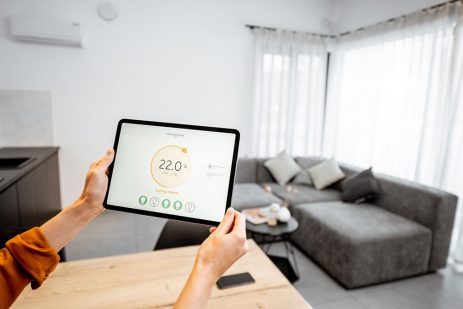
Homes will be smart or they will not be, but… What is a smart home? It is one that is totally controlled through automated systems and home automation. Home automation is an integrated technological system applied to a home to achieve intelligent control and automation. This implies efficient management of energy consumption, home security and accessibility, and a multitude of advantages that increase the well-being and comfort of the home. Some of its advantages include being able to automate thermostats, blinds, irrigation, etc.; improved security systems; energy efficiency that minimizes consumption without losing comfort…
Open Concept
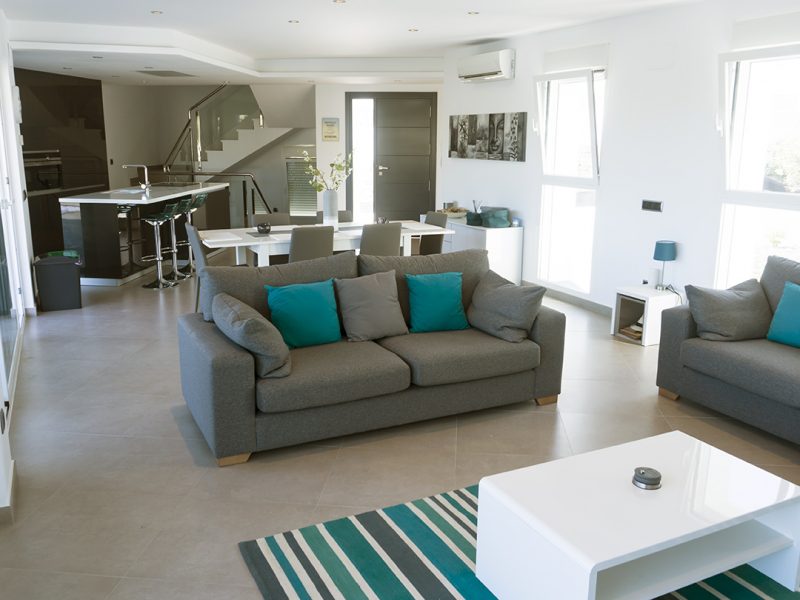
We have already talked to you about the open concept, that is, the absence of obstacles and walls in the rooms. This trend has several advantages, and among the most important we find the integration of light and landscape within the home. The approach for this type of space can be quite a challenge, as partitions must be replaced with other elements that maintain light and views, such as glass and wood divisions, the use of different levels to differentiate spaces, or the use of architectural elements like arches or columns to offer visual separations.
Integration of exterior and interior spaces
Every time we approach a project, the design we carry out at Arquifach covers both the exterior areas and the interior of the home. Our homes are located in dream locations. In beautiful towns on the Costa Blanca such as: Calpe, Altea, Benissa, Teulada or Moraira; which require us to pay special attention to the spaces that will surround the project.
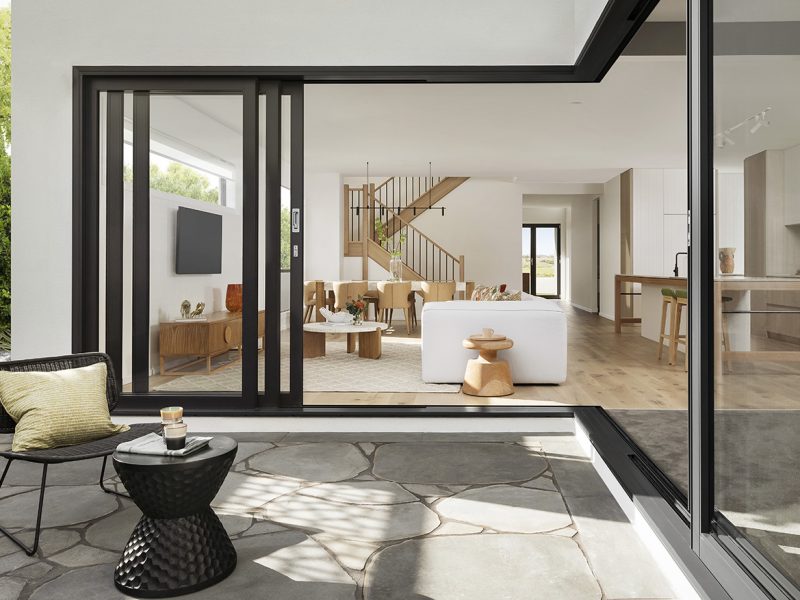
In the discipline of architecture, spaces are classified into two main groups: interior and exterior. The former are those defined by the delimitation of facades, partitions, and internal divisions. In contrast, external spaces are those whose only limits are those of the land where the building is located and therefore the property.
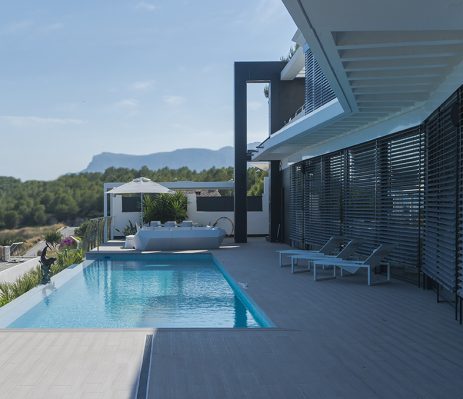
Depending on the possibilities of each land and home, it is possible to play with the connections between one space and another. For example, using sliding glass walls, we can make the interior completely open to the exterior, eliminating barriers and making our spaces extend completely. As we have seen on other occasions on our blog, the choice of land is crucial when approaching a project. When we have chosen well and the natural environment gives us tranquility and calm, it is vital to take advantage of that context in the design of our project. Exterior areas can be used for leisure or rest, or a mix of both.
How can we design exterior spaces? By distributing and delimiting the areas according to their use and using elements that contribute. Plants and shrubs can facilitate the use of spaces. Adding lawn or paved areas will also help establish visual boundaries and assign roles to each area. It is, above all, about taking advantage of the sunny days that our beloved Costa Blanca offers us.
Bioclimatic sustainable homes
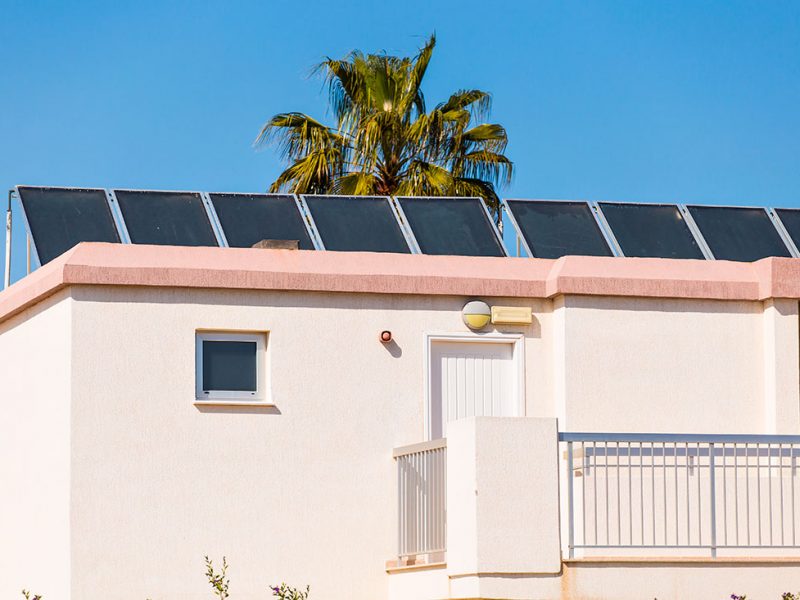
Sustainable homes are those that respect the environment, meaning that for their construction, both resources that promote energy saving and ecological materials have been used. They are characterized by being integrated into nature, with large windows and located in places where natural energy sources can be harnessed, that is, with good reception of light and water.
For a home to be sustainable, it must respect green areas and their biodiversity. In this way, during its construction, the goal is to have minimal impact on natural areas, respecting the local flora and fauna.
What is necessary to achieve a sustainable home? Taking into account the orientation to make the most of natural daylight hours. The objective is not simple: to capture maximum sunlight during winter while protecting against direct exposure during summer.
Achieving ideal thermal insulation and climate conditioning. Much more can be done to achieve energy efficiency, such as using low-consumption light sources and appliances, as well as biomass boilers that save energy. This insulation must be ecological, using healthy, ecological, durable, and efficient materials.
The use of renewable energies is also essential. The main renewable energies are photovoltaic, small wind power, and biomass (light, air, and organic matter). As all factors are related, to choose between one or the other we must consider the availability of space, the orientation of the home, its location, and the climatological characteristics of the place where we live, among others.
Finally, a sustainable home will respect the environment. The aim is to take advantage of all the resources offered by the environment, ensuring that the construction of the home has the least impact on the space where it will be located. For this, green roofs are used.
Arquifach: Architecture Studio Altea
If you are thinking of building a custom home on the Costa Blanca, contact Arquifach, Moraira architecture studio. It has a great team with over 40 years of experience.