It is an architect’s responsibility to make decisions that minimize the pollution resulting from our way of life. Many of you may be wondering if that role is really so important, and we can assure you that good planning, design, and execution of homes can neutralize CO², absorb it, and even reduce it without compromising comfort or well-being.
One of the essential aspects when building a sustainable home is energy efficiency. The thermal insulation of buildings is one of the key pieces in conditioning a home. It is estimated that around 70% of a home’s energy is lost through its facades and roofs, which is why it is important to create a well-insulated, airtight box. However, it must not be forgotten that this insulation must always be accompanied by an adequate ventilation system that allows good air quality inside the home.
Effective insulation, together with an optimal orientation of the construction and the use of sustainable materials, become fundamental elements for carrying out responsible architecture.
What are the characteristics of a sustainable insulator?
For an insulator to be considered sustainable or ecological, it must meet the following characteristics:
- It must be healthy: that is, non-toxic to humans and animals. Primarily, it should not contain petroleum-derived components or substances or additives that could be harmful to health.
- Efficient manufacturing: this characteristic refers to the energy consumption required for its manufacture, which must be minimal.
- Durability: they must last over time and therefore not need frequent replacement.
- Biodegradable: able to decompose by the action of microorganisms such as bacteria or fungi in a short period of time
- Efficient in thermal insulation: their function as heat transmitters must be minimal.
What materials are sustainable and effective for insulating a home?
Cork
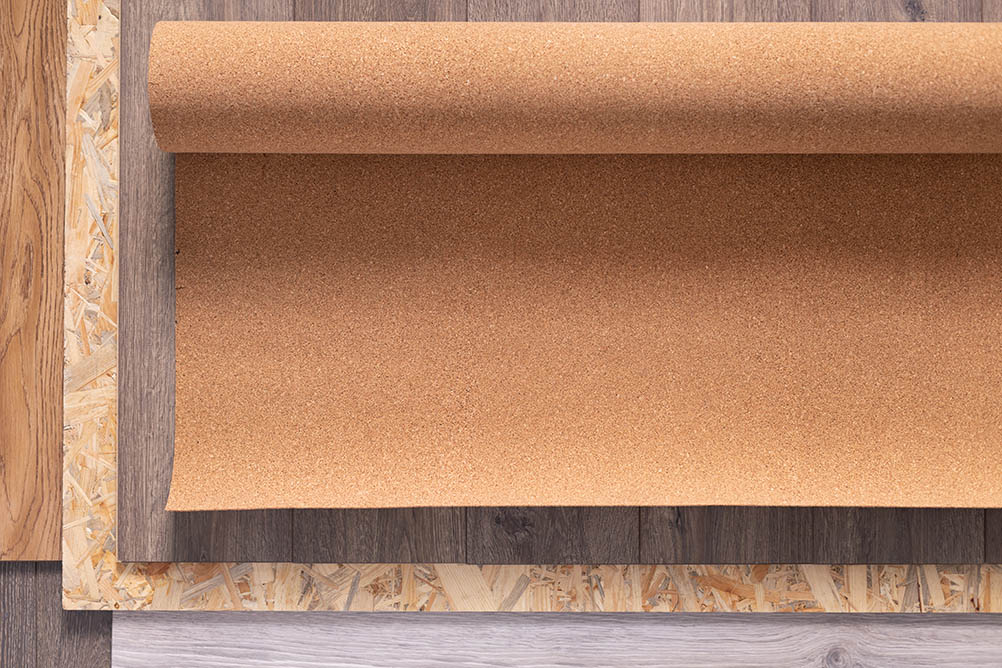
It is a 100% natural material that comes from the bark of cork oaks. The cork oak only thrives in seven Mediterranean countries: Portugal, Spain, France, Italy, Morocco, Algeria, and Tunisia, which together account for more than two million hectares. As if that were not enough, besides being present in Spain, our country ranks second in the world cork production ranking. And the regions that monopolize the cork oak landscape are: Andalusia, Extremadura, and Catalonia.
Its production is sustainable, as even during extraction, waste generation is low. And more importantly, the tree regenerates its bark, so the material does not deplete the resource source.
Its structure of polyhedral cells, which are practically empty inside, gives it extraordinary waterproofing and insulating properties, both thermal (conductivity of 0.041 W/m·K) and acoustic.
Cellulose
Ecological insulations based on cellulose are made from waste newspaper. These residues are ground and mixed with other products to increase their fire resistance, thus making them safer for home construction. The final result is small fibers that can be blown in to fill gaps in walls and ceilings or placed as blankets covering large areas.
It is a product derived from reused paper, therefore manufacturing it requires little energy consumption; it is also a lightweight product that can be easily transported.
Sheep’s Wool
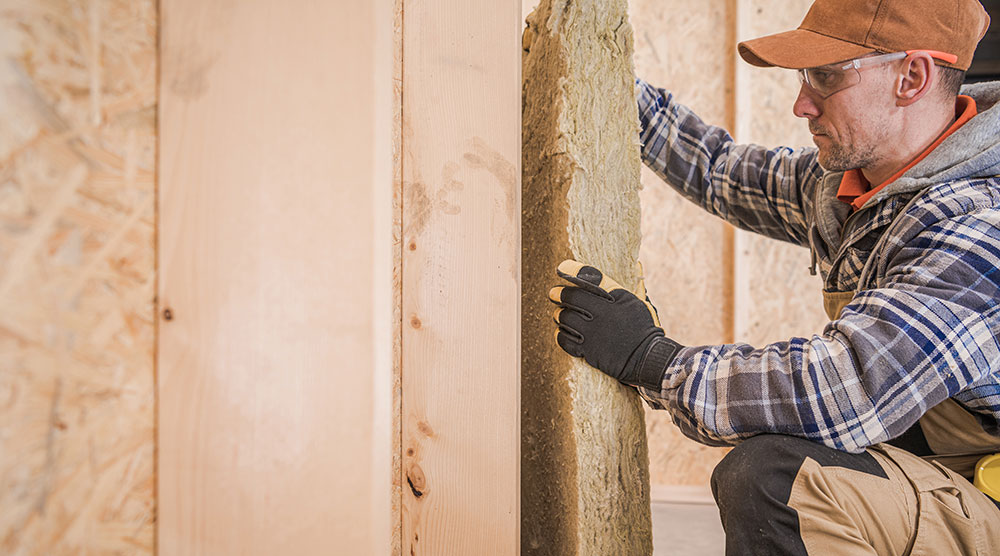
Sheep’s wool is an insulator that has been used for centuries. One of the best qualities of this insulator is its breathability, which does not compromise its insulating effect. When the outside temperature rises, the fibers warm up, release moisture, and cool down, refreshing the environment. Conversely, when the outside temperature drops, the fibers cool down, absorb moisture, and warm up.
As with cork, its production does not harm the sheep, which generates it naturally. Therefore, its production is sustainable and 100% ecological. Another notable advantage is its durability. As long as its installation has been correct, it maintains its density and cohesion for decades.
Hemp
From the hemp plant, long, very resistant fibers are obtained, with very significant thermal and acoustic insulating properties, which do not require treatment against insects.
This sustainable insulation is presented in the form of rolls, boards, blankets, or in bulk, and although its price is somewhat higher than that of other ecological solutions, its moisture-regulating properties are highly valued in bioconstruction, being able to absorb up to 15% of its weight.
Arquifach: Costa Blanca Architecture Studio
If you are thinking of building a custom home, contact Arquifach, Costa Blanca architecture studio. Count on a great team with over 40 years of experience.