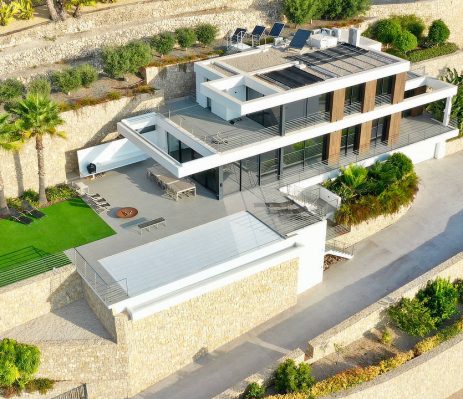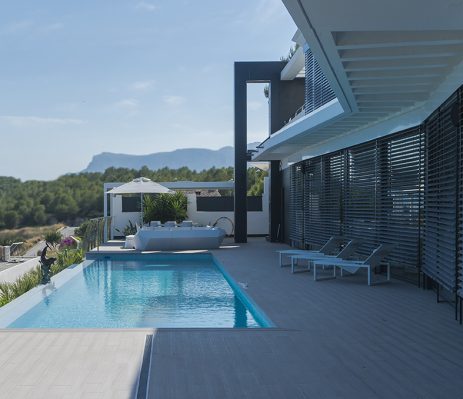
The Costa Blanca has a particularly mild and sunny microclimate. There are places like Denia, Jávea, Moraira, Calpe, Altea, Benidorm, Villajoyosa, Campello, Alicante, Elche, Guardamar del Segura, and Torrevieja that receive a lot of tourism and new foreign residents seeking this very distinctive climate.
The average temperature in January and February is around 12°C, and in July and August around 26°C. Even in the middle of winter, there are several sunny days; on these occasions, the daytime temperature reaches and exceeds 20 degrees Celsius. In summer, although the heat is usually bearable thanks to the breeze, there are some especially muggy days. There can be short periods of intense heat, where temperatures can even exceed 30 degrees.
The hottest seasons are concentrated in the months of July (the driest month) and August, with an average temperature of 26 degrees. The coldest month is undoubtedly January, with an average temperature of 11 degrees Celsius. The rainiest month is October.
Residents of the Costa Blanca, whether temporary or permanent, are very aware of the importance of having efficient home cooling that allows them to control costs and the environmental impact of consumption.
What is sustainable cooling or ecological cooling?
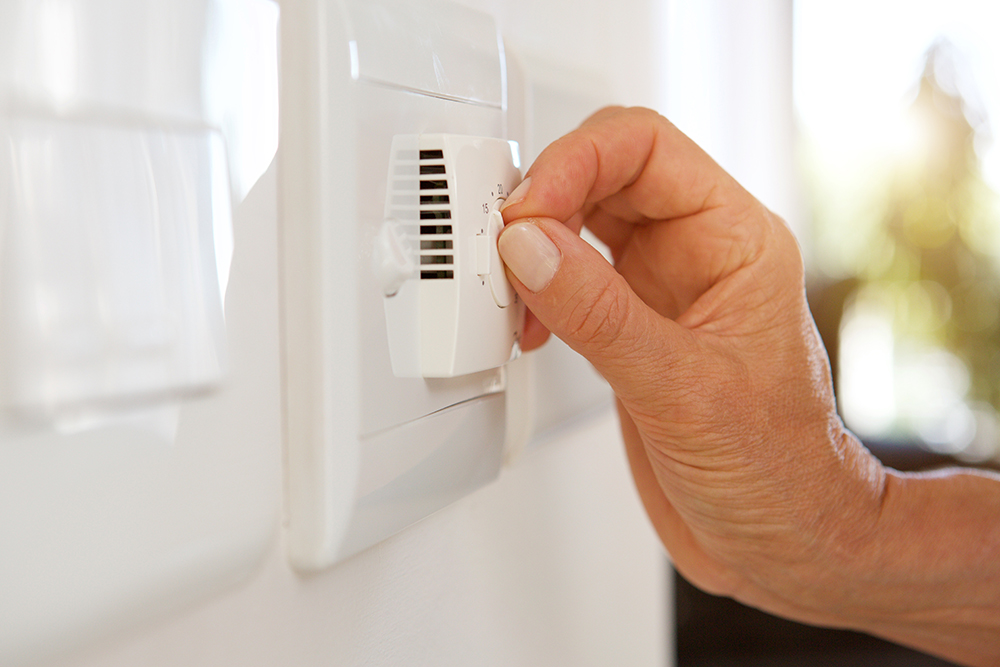
It is common for air conditioning to become one of our great allies in combating the heat, but what is its ecological impact? Air conditioners consume a lot of electrical energy, which causes more CO2 to be emitted into the atmosphere and therefore worsens global warming. A 2011 report by Ecologistas en Acción showed that the systematic use of air conditioners can increase the temperature by 1.5º or 2º in summer in cities like Madrid. It is clear that for the sake of the environment, among other reasons, many clients are interested in integrating sustainable cooling systems from the start. At Arquifach, we pride ourselves on practicing responsible architecture. That is why we propose a multitude of clean and cheap alternatives to traditional air conditioning.
There are clean and cheap alternatives to traditional air conditioning.
Mechanical or intelligent ventilation
It works with a ventilation unit that forces air extraction to renew it and thus guarantee indoor air quality. Within this group, we can find double-flow mechanical ventilation, which is the ideal solution for individual homes. It does not emit cold air like conventional mechanical systems, but rather renews the air, which also arrives filtered. What this system achieves is good air circulation, removing stale air from rooms. Although the cooling, compared to traditional air conditioning equipment, is not as great, if a correct installation is carried out, it will not be necessary to cool the air.
Aerothermal ventilation system
It is known for being very efficient both for cooling homes in summer and for heating rooms in winter, as we have mentioned, especially in January, the coldest month on the Costa Blanca.
The core of aerothermal energy is a machine known as a heat pump that harnesses energy from the air to convert it to the desired temperature and propel it through a system that will distribute this air throughout the house. It is perfect for single-family or medium-sized homes, passive houses, or even in smart buildings that are fully automated where everything is interconnected and controlled via the Internet.
Bioclimatic cooling or evaporative cooling
Although it is a system associated with commercial cooling and large spaces, it is perfectly applicable to individual homes. This alternative allows saving more than 80% of the energy cost of maintaining the temperature in the home. It involves studying the natural environment and the location where it is built to lower temperatures while maintaining air quality. It is a non-polluting system based on using water as a coolant. The most common equipment that uses evaporative cooling are condensers and cooling towers. Its operation is based on releasing the heat condensed in refrigeration machines. This heat is transferred to the atmosphere through the evaporation of a small amount of water. And how does this process take place? By establishing direct contact between the circulating water and an air stream.
One of the main advantages compared to traditional air conditioning is that spaces do not need to be hermetically sealed. An evaporative cooler works using the circulating air. It is therefore recommended to keep them open. Thanks to this characteristic, they can also be used outdoors. In this way, the air will always be pure, and the experience of being able to be outdoors while maintaining the temperature is great.
Arquifach: Architecture Studio Alicante
If you are thinking of building a custom home on the Costa Blanca, contact Arquifach, Moraira architecture studio. It has a great team with over 40 years of experience.