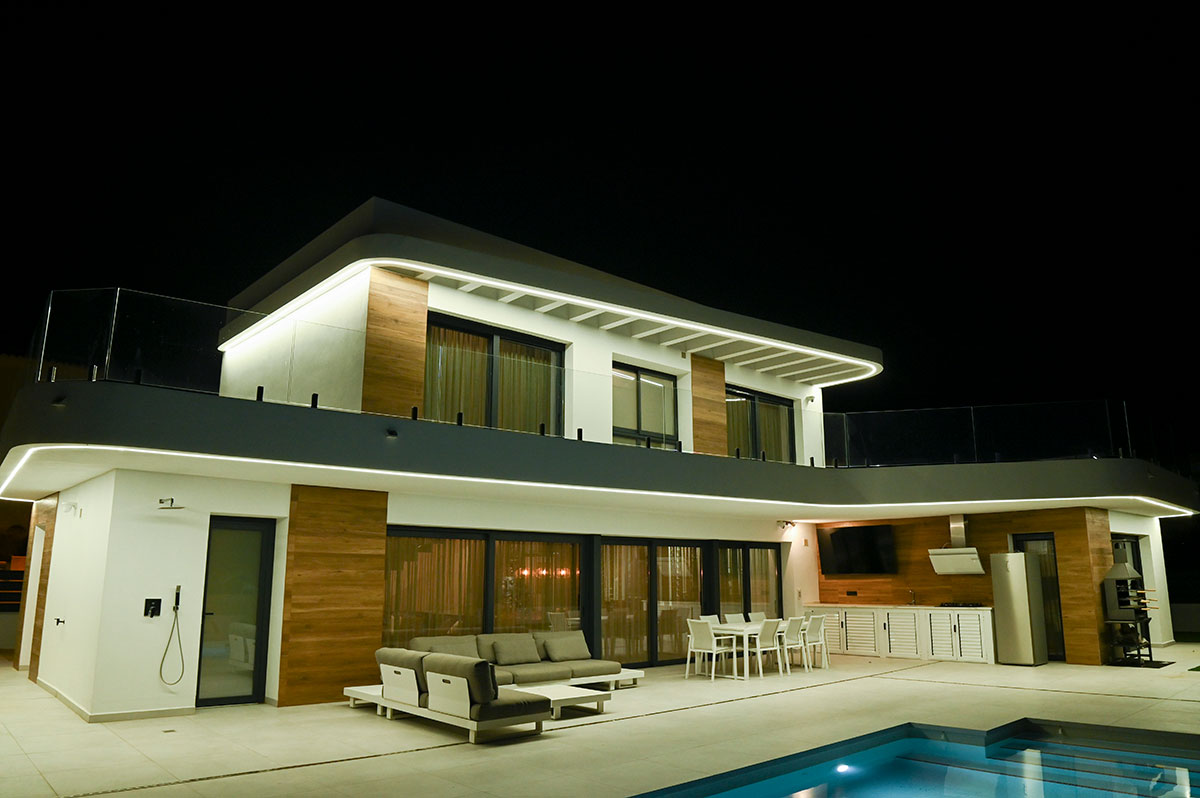
In recent years, architecture has taken a quiet but profound turn: it has once again looked toward the human being. After decades focused on technical efficiency, productivity, and formal aesthetics, the focus is shifting to something more essential: how we feel within the spaces we inhabit. In 2025, international trends confirm an increasingly solid conviction: architecture should not only protect us from the weather or symbolize progress, but also care for our mind, our emotions, and our connection with nature.
This movement is structured around three interconnected pillars: biophilic design, integrated well-being, and human-centered design. Together, they shape a new way of understanding the built environment, where technology, materials, and form are subordinated to a fundamental question: how does this space improve people’s lives?
The power of biophilic design
The term “biophilia,” coined by biologist Edward O. Wilson, describes the innate human tendency to connect with nature. Biophilic design translates this principle into architecture, seeking to reintroduce the natural into increasingly urban and technological environments. In 2025, this trend has become one of the most powerful pillars of contemporary design.
It is no longer just about including plants or vertical gardens as decorative elements, but about integrating nature into the building’s DNA. The most innovative projects incorporate interior courtyards, green roofs, natural ventilation systems, and organic materials that breathe with the environment. Green walls, for example, not only improve aesthetics or air quality, but also act as thermal and acoustic regulators, creating pleasant microclimates within spaces.
Furthermore, natural light becomes a central resource. Large windows, skylights, and dynamic façades allow for a constant visual connection with the outdoors. This is no coincidence: numerous studies show that exposure to daylight improves mood, regulates circadian rhythms, and increases productivity. In hospitals, offices, and schools, biophilic architecture is already translating into less stress and greater emotional well-being.
Texture, color, and scent are also part of this sensory reconnection. Natural materials — wood, stone, clay, linen — convey warmth and authenticity, moving away from the cold minimalism of steel or industrial glass. In a world dominated by screens, biophilic architecture returns us to contact with the tangible and the living.
Integrated well-being: spaces that care for the mind
Beyond the connection with nature, contemporary architecture is beginning to take an active role in promoting mental and emotional health. Buildings are no longer conceived solely as containers for activity, but as environments that influence our energy, concentration, and mood.
Integrated well-being involves designing spaces that promote physical comfort — temperature, lighting, acoustics — as well as psychological comfort. This includes rest areas, quiet or social zones, smooth transitions between interior and exterior, and a spatial organization that reduces sensory overload.
In offices, for example, environments are sought that encourage collaboration without sacrificing privacy. In hospitals, architecture is designed to reduce patient anxiety: bright hallways, views of the landscape, therapeutic gardens, and warm colors become allies in the healing process. In homes, open and adaptable spaces allow the environment to be tailored to the emotional needs of the moment.
The rise of neuroarchitecture, a discipline that studies how spaces affect the brain, has driven this paradigm shift. Scientific evidence is clear: the shape, color, and proportion of spaces alter our emotions and behaviors. For example, high ceilings stimulate creativity; symmetry generates a sense of calm; green and blue tones reduce stress.
In this way, well-being is no longer limited to physical comfort, but is understood as an integral balance between body, mind, and environment. Architecture thus becomes a therapeutic and preventive tool: a well-designed space can heal.
Human-centered design: architecture that listens
The third pillar of this transformation is human-centered design, a movement that understands architecture as an extension of the user. In contrast to the impersonal and standardized models of the 20th century, contemporary projects seek to recover the emotional, symbolic, and communal dimension of space.
Human-centered design starts from a simple but revolutionary premise: buildings must adapt to people, not the other way around. This translates into more flexible, accessible, and empathetic architecture. Homes incorporate spaces that can transform according to life stages; public spaces prioritize inclusion, diversity, and social interaction; and schools or cultural centers are conceived as places for gathering and belonging.
In this context, technology is also placed at the service of the human. Smart sensors and systems do not seek to control everything, but rather support the user’s emotional comfort: adjusting light, temperature, or sound based on their presence or activity. Architecture becomes a constant dialogue between the person and their environment, a sensitive organism that responds and accompanies.
Human-centered design also recovers the symbolic and narrative dimension of space. Each building tells a story, reflects values, and creates identity. In a time where speed and disconnection dominate urban life, well-designed spaces invite us to pause, to breathe, to reconnect with ourselves and with others.
Ultimately, human-centered design reconciles technology with emotion, efficiency with empathy, modernity with memory. It is not just about building better, but about building with meaning.
Returning to the essential
The rise of biophilic design, integrated well-being, and human-centered architecture marks a return to the essential: life. In a hyperconnected, polluted, and accelerated world, these approaches seek to restore harmony between human beings and their environment. It is not a passing trend, but an urgent response to contemporary challenges: urban stress, loneliness, climate change.
The architecture of 2025 is shaping up to be a living, empathetic, and regenerative discipline. Buildings are no longer mere static objects, but habitable ecosystems that breathe, feel, and accompany. Designing with biophilia, well-being, and humanity not only improves the quality of space, but also the quality of our existence.