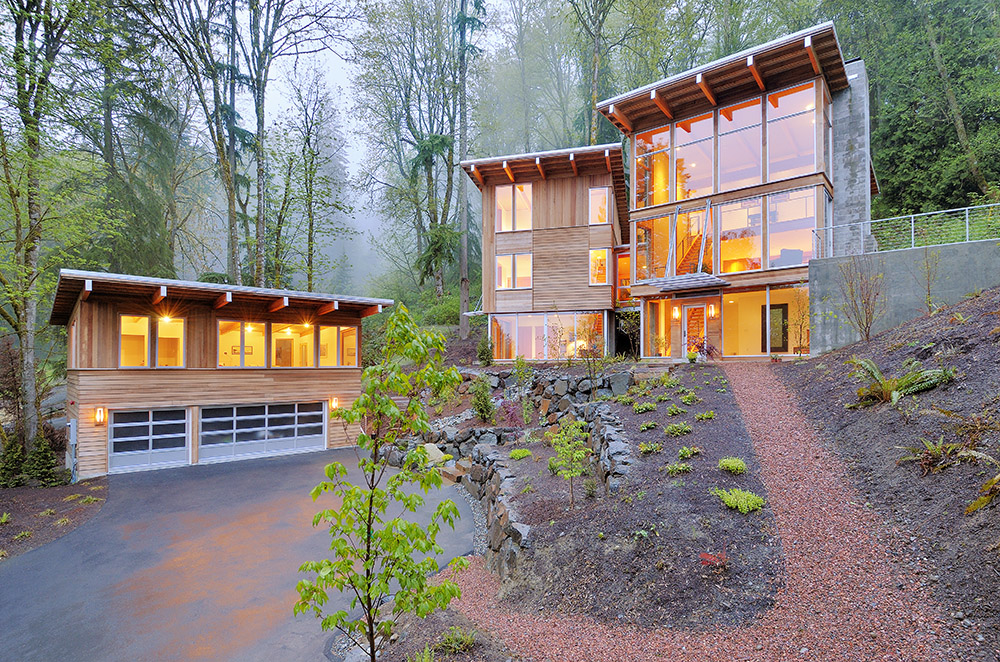
Spain is a country with many protected natural areas. One of the attractions of our country for foreign tourists who come to visit us is undoubtedly the multitude of natural landscapes spread throughout our territory. There are some regulations that restrict construction and protect these resources. In this article, we are going to review the most important one, which is the Land and Urban Rehabilitation Law. This regulation considers three types of land: urban, developable, and non-developable.
Types of land according to Spanish regulations
Urban land
Three conditions must exist for land to be considered urban:
- Having the essential services of water supply, electricity, and sewage, and their corresponding access points.
- The area must show clear urban or construction development.
- Comply with the stipulations of the municipal planning plan. The municipal urban planning plans are the instrument responsible for:
- Classifying the land, in order to establish the corresponding legal regime.
- Defining the urban implementation model and the determinations for urban development.
- Defining the general structure of the territorial urban planning and the guidelines for carrying out development.
- Determining the circumstances that may lead to its modification or revision.
The classification of urban land establishes these two distinctions:
- Consolidated: This is land or a plot that already has all the required conditions and permits for building.
- Non-consolidated: Those that do not yet have all the supplies or accesses to be qualified as buildable land or plots.
Developable land
These are lands that are neither urbanized nor built on and require a specific development plan. Two types are also distinguished here:
- Sectorized developable land: where construction can take place immediately.
- Special developable land and non-sectorized developable land: it can be urbanized but with conditions, following strict environmental protection rules.
Non-developable land
These are lands that are protected for their ecological, social, or cultural value or for their economic use (agricultural or livestock farms). On this land, construction is only possible in two cases: single-family homes and buildings linked to economic activity or public buildings or those of social interest. In these cases, there are some instances where urbanization can occur, although each province has its own legislation and it may change.
What does “single-family homes and buildings linked to the activity” mean? There are, for example, some cases where, if the land exploitation activity requires constant attention, the possibility of construction on rustic land may be considered. For instance, in the urban plan of the Region of Murcia, it states that in order to build a single-family home, the land in question must have at least one hectare (10,000 square meters), at least 80% must be dedicated to cultivation, and the building may not exceed an area of 300 square meters.
Are there exceptions for building on non-developable land?
As we have already discussed, the Land and Urban Rehabilitation Law aims to preserve rural and natural environments, therefore nothing can be built on this type of land that falls outside the development of permitted activities (agricultural, mining, livestock, etc.).
What happens if I have already built on non-developable land?
If, out of ignorance, you have ventured into building a home on non-developable land, that construction is in an “illegal” situation. In that case, you must try to legalize the property.
If you have built a home on non-developable land and it is in an “illegal” or “non-compliant” situation, your case will be that of property legalization. Write to us if you want to legalize your home.
The process of legalizing a home
To legalize a home, you must submit the technical documentation to the local town hall that corroborates that the property complies with municipal regulations. This is called an building legalization file. This documentation must be prepared by an architecture studio. Once the documentation is submitted, the town hall will open a legalization file which may be resolved with the legality of the building.
The legalization report prepared by the architect will certify that the home or building complies with the habitability and safety conditions required by current legislation and, therefore, that it complies with all municipal ordinances regarding urban planning and land use.