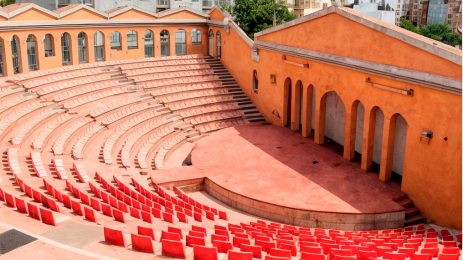
Calpe combines a diverse architectural history ranging from traditional constructions (old town, church, and defensive tower) to internationally renowned modern and postmodern architecture, especially thanks to the work of Ricardo Bofill. La Muralla Roja, Xanadu, and El Anfiteatro are examples of how innovative design can dialogue with the Mediterranean coastal landscape and become a global reference for architecture and photography enthusiasts.
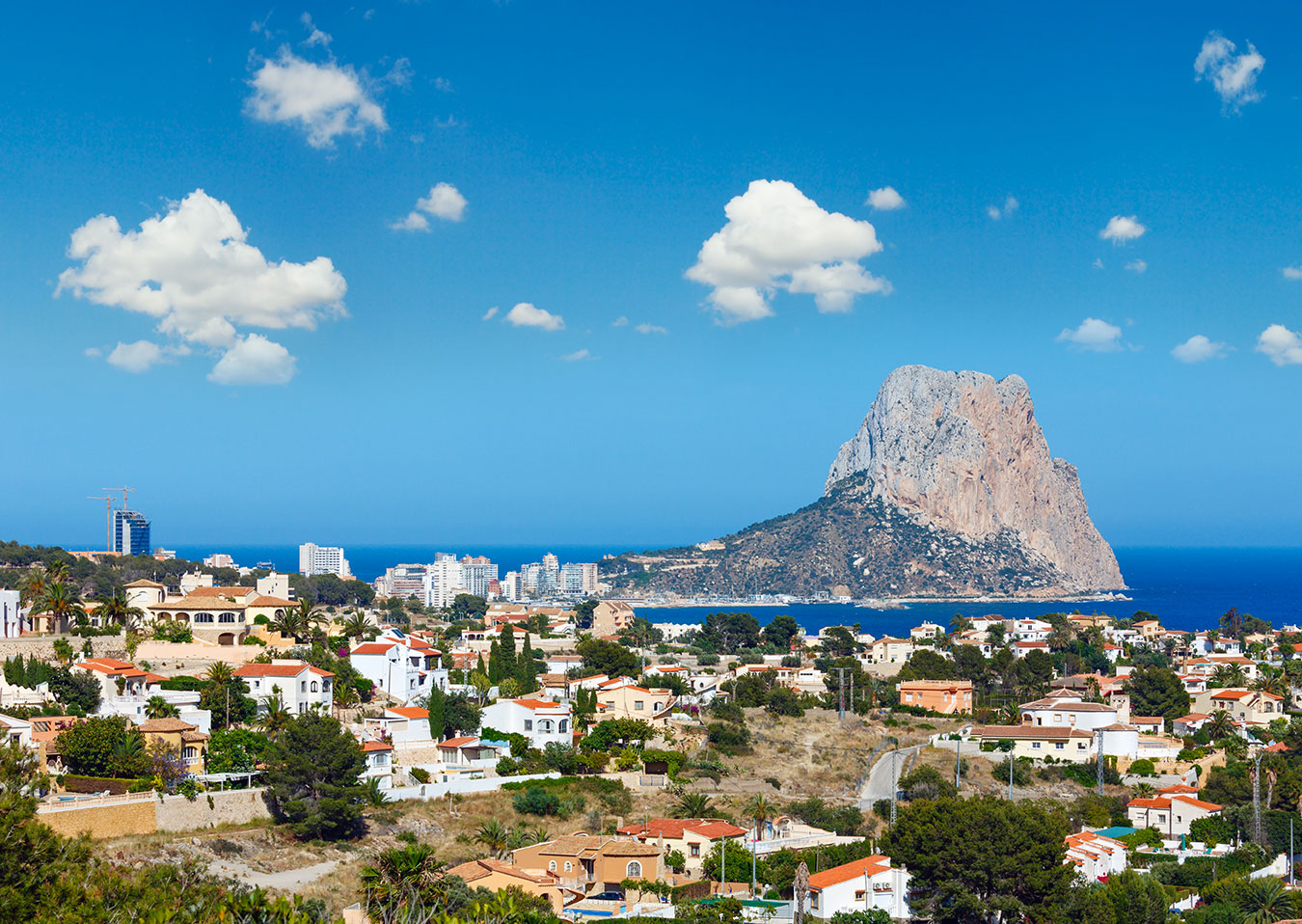
When discussing Calpe, the image that usually prevails is that of the Peñón de Ifach, the bright beaches, and contemporary tourism. However, away from the seafront and the more recent vertical architecture, there is a place where time moves at a different pace: the old town of Calpe. There, among narrow streets and whitewashed facades, a vernacular architecture is preserved that responds not to trends or renowned authorship, but to centuries of adaptation to the climate, the local economy, and the daily life of its inhabitants.
The vernacular architecture of the historic center is not a monumental complex nor an open-air museum, but it constitutes one of the municipality’s most valuable heritages. It is a silent, functional, and deeply human architecture, which narrates the urban history of Calpe through its materials, proportions, and spaces.
Vernacular Architecture Calpe: Building from Experience
Vernacular architecture is defined as that which arises without academic architects, as a result of knowledge transmitted from generation to generation. In the case of Calpe, this architecture responds to the conditions of the Mediterranean: a warm climate, an economy historically based on fishing, agriculture, and maritime trade, and the need to protect oneself from both the sun and former external threats.
The dwellings in the old town were not designed to stand out, but to serve daily life. Every construction decision—from the thickness of the walls to the orientation of the windows—responds to practical, economic, and climatic logic. This constructive wisdom, so valued today, turns the old town into an early example of sustainable architecture, long before the term existed.
The Urban Layout: Narrow Streets and Climatic Protection
One of the most characteristic features of Calpe’s old town is its compact urban layout. The streets are narrow, winding, and often steep, an arrangement that fulfills several essential functions. On one hand, it reduces direct sun exposure during the hottest hours of the day, generating shade and natural air currents. On the other, it fosters social proximity, creating meeting spaces where community life develops spontaneously.
This urban fabric also responds to a historical defensive logic. For centuries, Calpe was vulnerable to pirate attacks, so the city was organized around walls and controlled access points. Although much of these defenses have disappeared, the old town retains that feeling of refuge, of a protected core against the outside.
The small squares, unexpected corners, and staircases connecting different levels create a rich and human spatial experience. Walking through the old town is not traversing a city designed for cars or mass tourism, but inhabiting a space conceived for the pedestrian and daily life.
Traditional Dwellings: Simplicity, Functionality, and Beauty
The houses in Calpe’s old town present a clear and recognizable typology. Two or three-story dwellings predominate, with narrow, deep facades adapted to the original plots. The walls, traditionally built with local stone masonry, are coated with white lime, an economical material that reflects sunlight and helps regulate indoor temperature.
The white facade, so characteristic of Mediterranean towns, is not just an aesthetic element but an effective climatic solution. Lime, besides cooling, acts as a natural disinfectant, something essential in past eras. Often, these facades are enlivened with ceramic tiles, small decorations that add color and personality without altering the sobriety of the whole.
Wrought iron balconies are another distinctive element. More than simple adornments, they serve a social function: they allow one to observe the street, converse with neighbors, and participate in community life from the threshold of the home. The iron, worked by local artisans, introduces a discreet yet expressive ornamental language, where each railing is slightly different.
Doors, Windows, and the Transition Between Public and Private
In the vernacular architecture of Calpe, the relationship between public and private space is carefully attended to. The solid wooden doors, often painted in dark or blue tones, mark a clear but welcoming boundary. Many preserve knockers, ironwork, and original details that speak of the artisan craft and the symbolic value of access to the home.
The windows, generally small and well-proportioned, are designed to allow cross ventilation without compromising privacy or thermal comfort. Wooden shutters, traditional blinds, and simple grilles complete a passive climate control system that is exemplary today.
This interplay of thresholds, balconies, and windows creates an architecture that does not enclose itself but constantly dialogues with the street. The dwelling is not an isolated object, but another piece of the urban fabric.
Local Materials and Economy of Resources
One of the most notable values of the vernacular architecture of Calpe’s old town is the use of local materials. Stone, lime, wood, and ceramics form a simple yet effective repertoire, adapted to the availability and technical capabilities of the time.
This economy of resources does not imply architectural poverty, but quite the opposite: a constructive intelligence based on knowledge of the environment. The thick walls act as thermal mass, the sloping roofs evacuate rainwater, and the interior courtyards, when they exist, improve ventilation and natural lighting.
At a historical moment when contemporary architecture seeks to reduce its ecological footprint, the old town of Calpe offers a proven model of passive sustainability, where comfort is achieved without additional energy consumption.
Color, Identity, and Memory
Although white dominates, Calpe’s old town is not monochromatic. The details in blue, green, or yellow, the plant pots, the tiles, and the painted doors provide a rich and approachable visual identity. Each house reflects the taste and personality of its inhabitants, without breaking the harmony of the whole.
This architecture does not seek to impose itself, but to belong. Its value lies in repetition, in continuity, in the sum of small decisions that, together, build a coherent urban landscape. It is an architecture of memory, where each renovation, each layer of paint, adds a new story without erasing the previous ones.
The Old Town of Calpe Facing Modernity
In recent decades, Calpe has experienced strong urban growth linked to tourism. Faced with this development, the old town presents itself as a necessary counterpoint, a reminder of another way of inhabiting the territory. Its preservation does not imply freezing it in time, but finding a balance between conservation and contemporary use.
The respectful rehabilitation of these dwellings, the maintenance of traditional materials, and the protection of the urban layout are key to avoiding the loss of identity. The current challenge is not only architectural but cultural: to keep alive the relationship between the inhabitants and their built environment.
Calpe, an Architecture that Continues to Teach
The vernacular architecture of Calpe’s old town demonstrates that architectural quality does not depend on spectacularity or the signature of a recognized author. Its value lies in adaptation to the place, the climate, and daily life, in a way of building that understands architecture as an inseparable part of the community.
In an increasingly homogeneous world, these spaces offer an essential lesson: to build well is to build with meaning, with respect, and with memory. The old town of Calpe is not just a collection of old houses; it is a constructed narrative, a living heritage that continues to inspire new ways of thinking about contemporary architecture.
Because, sometimes, the future of architecture lies not in looking forward, but in learning to read what has already been built with wisdom.