With the arrival of good weather, we receive many inquiries about building a pool on the剩余 land to escape the heat. And although building a pool from scratch is not a overly complex project, it is necessary to take into consideration some prior aspects related to design, permits, or the technical aspects of construction. Don’t worry about anything; at Arquifach we are going to give you some keys in this article:
Technical Aspects
Can a pool be built on all types of land?
Spain’s land law restricts pool construction in some cases, such as those built on rustic land. By definition, rustic land is categorized as common or protected. However, the regulations governing construction on this type of land correspond to the town councils and autonomous communities. As we have already mentioned, there are restrictions, but it is not necessarily prohibited. We must go to the local Town Hall to clarify any doubts. In other articles, we have already seen the importance of the urban planning report when purchasing a plot.
Construction permits for building a pool
Built pools require a prior technical project that evaluates the distance of our construction from neighboring boundaries, distances to passageways or connections to the municipal water network, and other aspects such as the land’s buildable area. This project must meet all criteria and must be submitted to the municipal Town Hall.
Once validated, the municipal construction license will be received and the project can begin without any problems or impediments.
From the Arquifach studio, we take care of developing this project and submitting it to the relevant authorities so you don’t have to worry about anything. The important thing is to have an architecture studio that makes things easy so you only have to worry about enjoying it.
Construction
50 years ago, the pool construction system was initially based on concrete walls, formwork, or filled concrete block or solid brick walls. In all cases, with internal waterproofing and a ceramic tile finish.
Gradually, the gunite or projected concrete system became established. It is carried out by projecting concrete onto the walls and floor of the pool, after placing the reinforcement and part of the installation that must be embedded, such as drains, jets, lights, etc. Initially by dry process, using a machine installed on-site, which the operators prime with cement, sand, and a little water that is added during the guniting process when projected with compressed air. In some cases, other secondary components such as setting accelerators are often added.
This mixture is projected little by little, at the speed at which two operators can add the materials and another projects the concrete onto the walls and floor of the pool. This system was tedious and slow, and occupied labor for a couple of days. In addition, it raised a lot of dust, as the mixture is practically dry and, as I said, very slow.
Another system is the wet process, in which the three ingredients are mixed at once: cement, sand, and water. As the mixture is more fluid, the performance is higher, allowing large pools to be built in a single day. One of its advantages is that the pool shell is made without joints, resulting in a monolithic shell. Furthermore, the mixing is done at the concrete plant, which ensures homogeneity and the safety of more accurate dosing than in the dry process.
The construction of pools by the wet process requires that the operators be trained and have skills in the field. They are responsible for handling and controlling the mixture and the projection hose to maintain consistency, humidity, and prevent it from sagging at any time.
Design Aspects
Types of pools
As is obvious, before starting our project we must decide what type of pool we want to build. Each pool design has its particularities, such as durability, price, or size and capacity. We must evaluate each one based on our needs.
In general terms, we can divide the types of pools into:
Above-ground pools: These pools are characterized by being supported on the ground, meaning there has been no excavation process. They usually have faster installation and lower cost depending on whether they are custom-made or not. They tend to be shallow and have limited design.

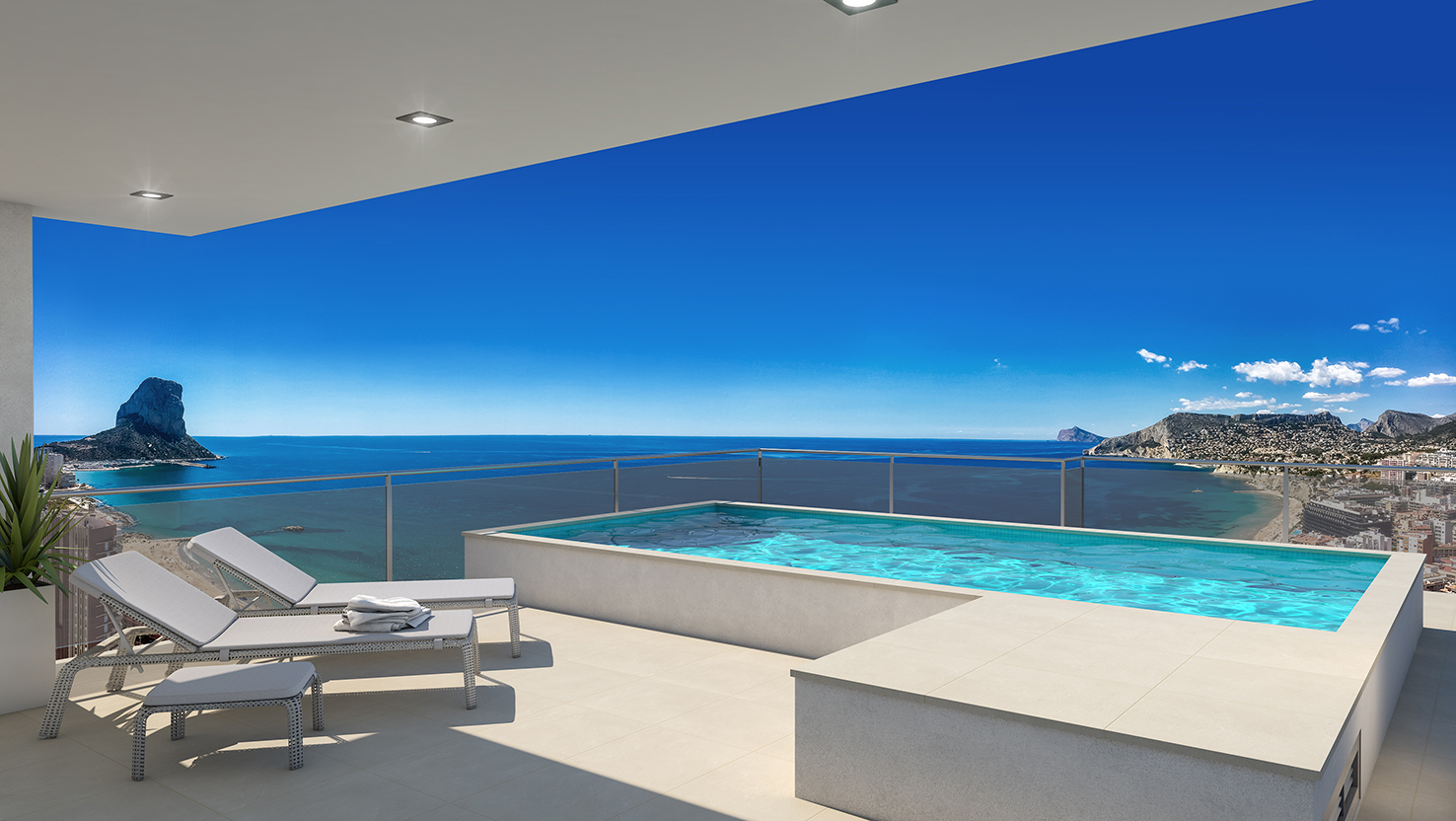
Liner pools: Due to their light weight, being made of PVC, these pools are the stars of rooftops and attics. Despite their apparent fragility, their liners are highly resistant to both punctures and water loss, making them a good value-for-money option.
Fiberglass pools: These pools are created from pre-designed molds, so their installation is relatively easy and quick. Similarly, this “pre-design” has the disadvantage of not being able to adapt perfectly to our space. It also requires continuous maintenance, as its outer protective layer tends to deteriorate over time.
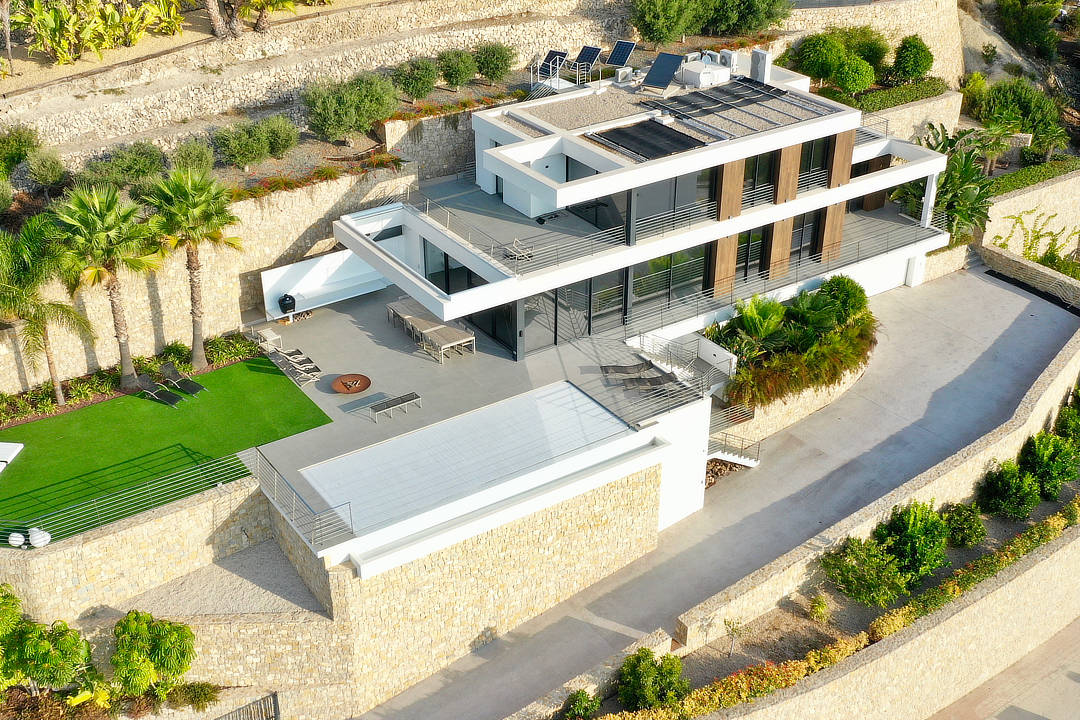
Gunite pools: Fully customized, this is the most resistant and versatile option as it adapts 100% to all our needs, whether finishes, measurements, or terrain. It is true that it is the least affordable option to build, as they are constructed with a highly specialized process like concrete projection, but its price is revalued given its great durability and low maintenance.
Pool dimensions
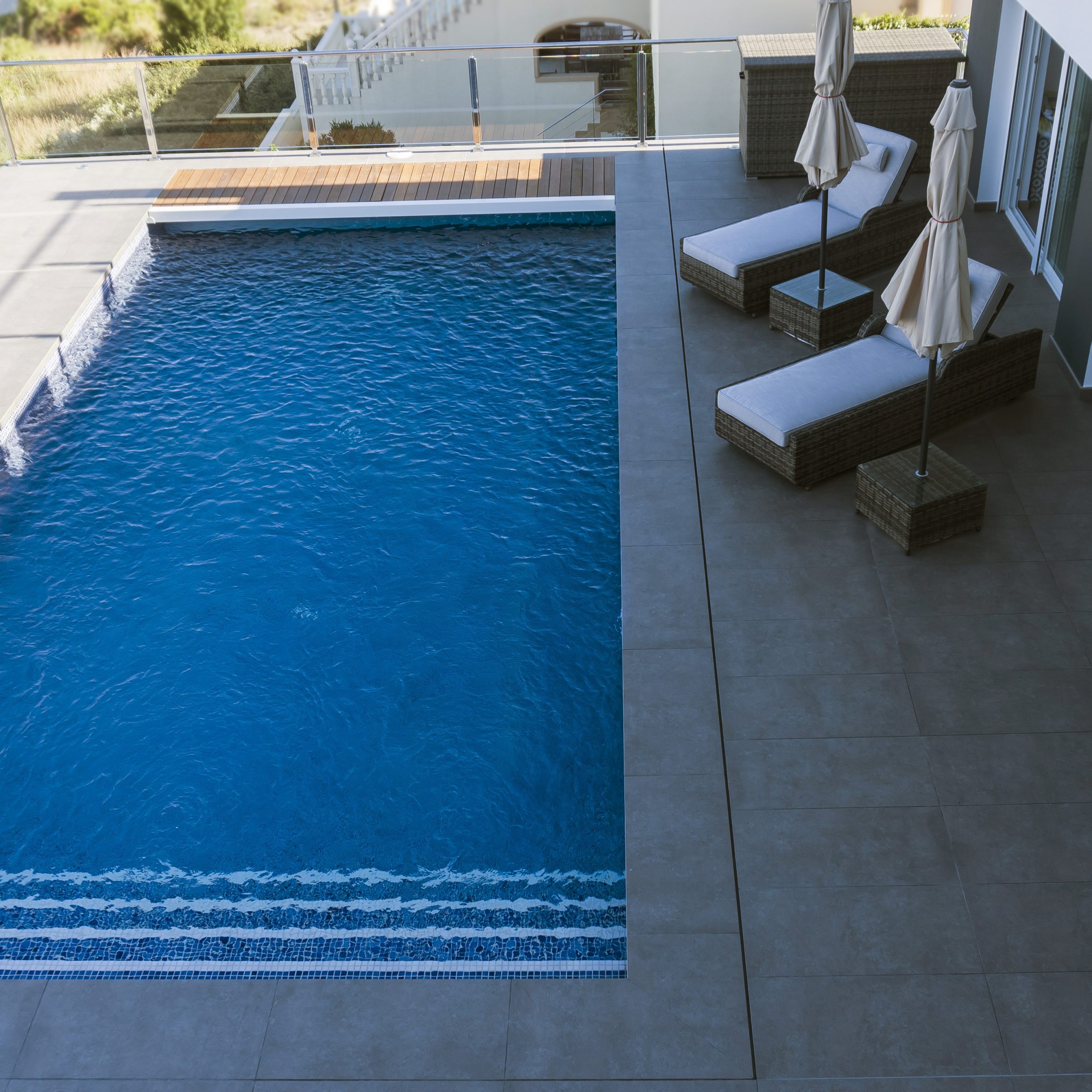
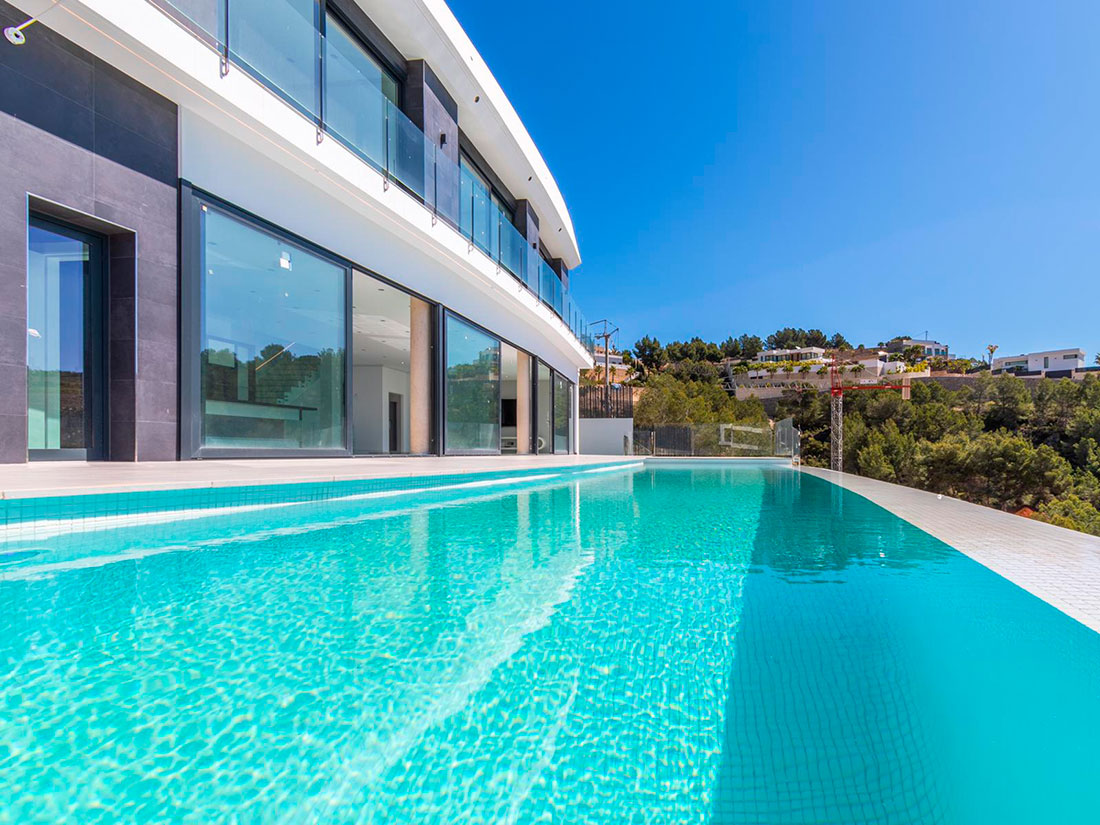
The dimensions of a built-in pool must adapt to the available space to optimize it as much as possible, so there are no “standard” measurements, although private pools usually range between 5 x 3 meters and 10 x 5 meters.
For its part, the depth is usually not more than 1.70 meters, as the greater the depth, the greater the water and energy consumption.
 The coating
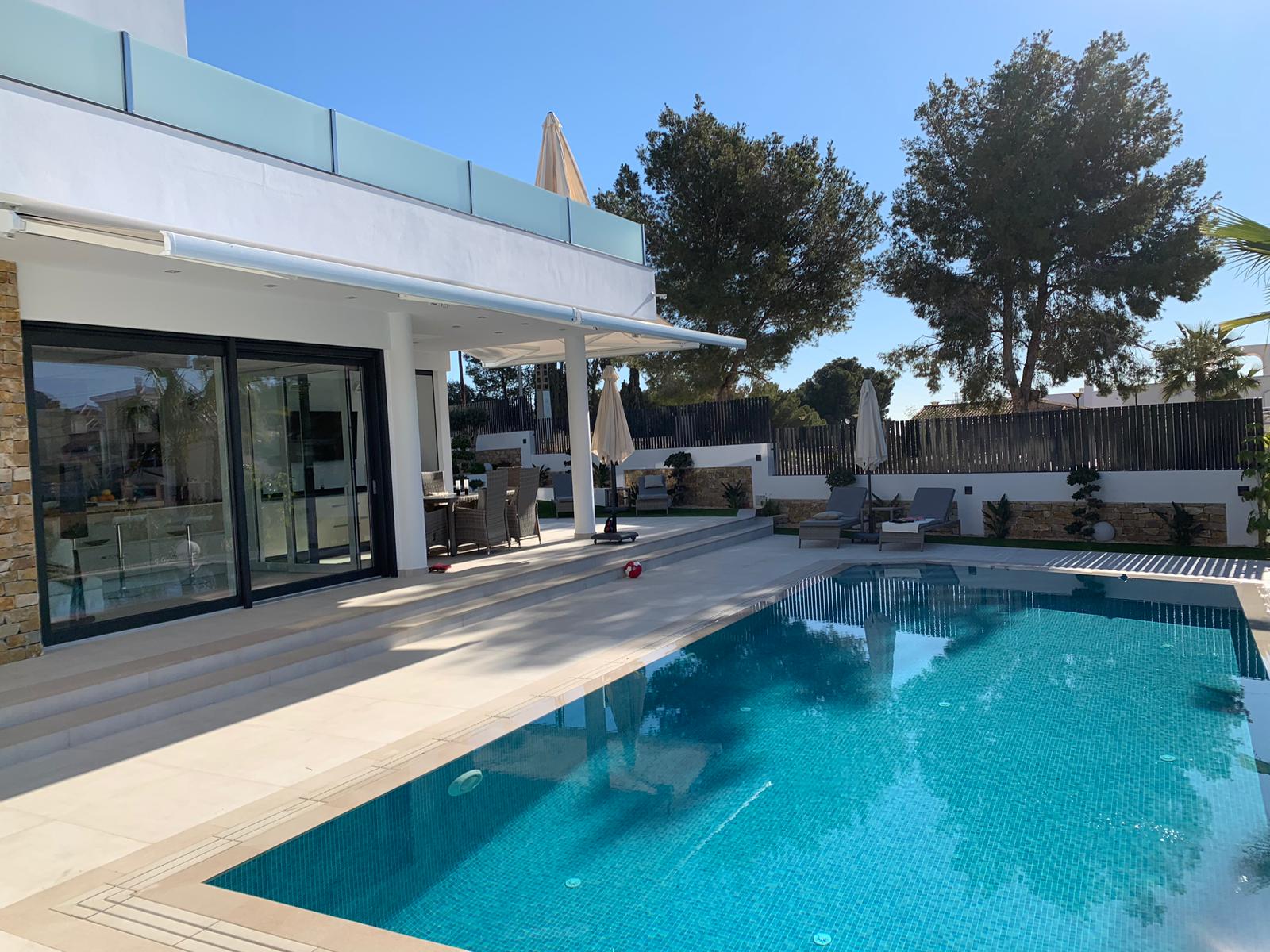
Currently, the most used coatings are ceramic tile and liner, and both can be found in a wide variety of colors, from sand, through blues or whites.
This coating is not only important for its waterproofing capacity but also has an aesthetic value. Darker colors are more sober and tend to age more easily, but at the same time, they are easier to maintain than light colors which are more eye-catching but also get dirtier.
Water purification
Although often forgotten, this is one of the essentials for pool maintenance. We need to consider how the water treatment and care will be when planning our pool. A good filter system will keep our water clean, just as the correct application of pool chemicals will prevent the proliferation of algae and bacteria that could harm our health.
Arquifach, Alicante architecture studio, helps you design and build your pool on the Costa Blanca
Contact Arquifach, Alicante architecture studio, with no obligation. We study the feasibility of your project and offer advice on the construction of new single-family homes or tourist apartment buildings. Count on the support of a specialized team on the Costa Blanca. Arquifach takes care of finding the ideal plot for each client’s needs, complying with municipal regulations. We cover the project in its entirety, from design, construction, planning, pathology reports, valuations, and general advice.