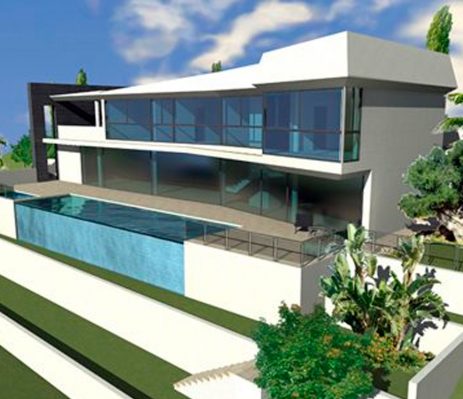
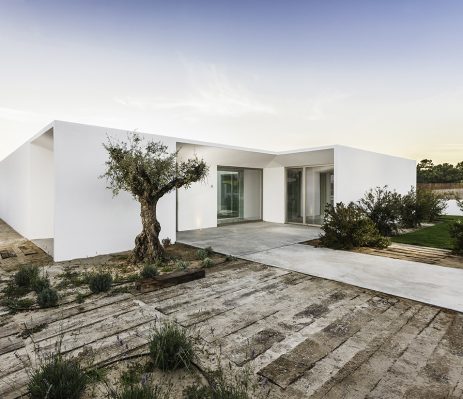
In a world increasingly aware of the urgency of addressing environmental and social challenges, architecture has begun to evolve beyond traditional sustainability approaches. One of the most innovative and promising currents in this context is regenerative architecture, a concept that seeks not only to minimize environmental impact but also to restore, revitalize, and enhance the ecosystems and communities in which it is embedded. In this article, we will explore in depth what regenerative architecture means, its advantages and disadvantages, notable examples of buildings that have adopted these principles, and the future prospects of this constantly growing discipline.
What is Regenerative Architecture?
Regenerative architecture is defined as a design approach that goes beyond conventional sustainability. While sustainability seeks to reduce the negative impact of buildings on the environment, regenerative architecture aspires to create buildings and spaces that have a positive effect, contributing to the health of the ecosystem, the community, and the local economy. This paradigm incorporates principles from biology, ecology, and systemic design to create structures that are self-sufficient, adaptable, and that promote resilience.
The concept is based on the idea that buildings can be active agents of environmental regeneration, rather than mere consumers of resources. This involves integrating natural systems, such as vegetation, rainwater harvesting, renewable energy production, and integrated waste management, all with a focus that fosters biodiversity, the circular economy, and community participation.
Fundamental Principles of Regenerative Architecture
-
Holistic Design: Considering all aspects of the environment and the interactions between them to create integrated and coherent solutions.
-
Efficiency and Self-Sufficiency: Minimizing resource consumption and maximizing the on-site generation of energy, water, and food.
-
Ecological Restoration: Incorporating systems that improve the quality of soil, water, and air, promoting biodiversity.
-
Community Participation: Involving local communities in the design and management process to ensure solutions meet their needs.
-
Resilience: Designing buildings capable of adapting and recovering from extreme events and climate changes.
-
Innovation and Technology: Using technological advances and biomimicry to optimize systems and processes.
Advantages of Regenerative Architecture
The adoption of regenerative principles in architecture offers multiple benefits that transcend mere environmental protection:
-
Reduced and Positive Environmental Impact: By regenerating ecosystems and improving environmental quality, these buildings help mitigate the effects of climate change, reduce pollution, and promote biodiversity.
-
Resource Savings: Self-sufficiency in energy and water lowers operational costs and reduces dependence on external resources.
-
Improved Quality of Life: Spaces integrated with nature, with better ventilation, natural lighting, and healthy environments, contribute to the physical and mental well-being of their occupants.
-
Resilience to Disasters: The ability to adapt to extreme weather events and recover quickly strengthens the safety and stability of communities.
-
Economic and Social Boost: Regenerative projects can generate green jobs, strengthen local communities, and promote circular economies.
-
Innovation and Leadership: Adopting these practices positions cities and companies as leaders in sustainability and social responsibility.
Disadvantages and Challenges of Regenerative Architecture
Despite its many advantages, regenerative architecture also faces significant obstacles that must be considered:
-
High Initial Costs: Incorporating advanced technologies and integrated systems can require significant investments compared to traditional construction.
-
Technical Complexity: Regenerative designs demand specialized knowledge and detailed planning that can complicate processes and delay projects.
-
Lack of Clear Regulations and Regulatory Frameworks: Innovation in this field sometimes clashes with traditional regulations that do not consider regenerative approaches, hindering their implementation.
-
Scalability: The replicability of highly customized and contextual solutions may limit their large-scale adoption.
-
Cultural and Economic Resistance: Social acceptance and economic interest in regenerative projects are still developing, facing potential skepticism or conflicting interests.
-
Maintenance and Management: Long-term sustainability requires specialized and committed maintenance, which can be a challenge in communities with limited resources.
Notable Examples of Regenerative Buildings
Here are some emblematic examples of constructions that exemplify the principles of regenerative architecture:
-
Bosco Verticale (Milan, Italy)
This pair of residential towers designed by Stefano Boeri represents a pioneering example of integrating vegetation into the urban structure. With over 20,000 trees, shrubs, and plants, the Bosco Verticale not only improves air quality and reduces the heat island effect but also promotes urban biodiversity. Furthermore, it contributes to the building’s thermal and acoustic regulation, saving energy and improving the quality of life for its inhabitants. -
Bullitt Center (Seattle, USA)
Known as “the greenest commercial building in the world,” the Bullitt Center incorporates rainwater harvesting, solar energy, waste composting, and natural ventilation systems. Designed to be net-positive in energy and water, this building functions as a self-sufficient ecosystem, promoting the regeneration of the surrounding environment through its minimal ecological footprint. -
The Eden Project (Cornwall, United Kingdom)
This complex of biomes and gardens uses regenerative design principles to create micro-ecosystems that conserve biodiversity and educate about sustainability. Although not a building in the conventional sense, its focus on ecological restoration and community engagement exemplifies the regenerative vision at a landscape level. -
The Edge (Amsterdam, Netherlands)
Considered one of the most sustainable buildings in the world, The Edge integrates solar energy, smart management systems, water collection, and passive design to reduce its ecological footprint. Its management system optimizes resource use and encourages regenerative practices at the community and urban environment level. -
Okohaus (Cologne, Germany)
This residential project combines energy efficiency technologies with urban agricultural production systems, such as rooftop gardens and green walls. It promotes food self-sufficiency and the integration of nature in dense urban environments.
Future Prospects of Regenerative Architecture
The future of regenerative architecture is projected with several trends and opportunities that could radically transform the way we conceive and build our spaces:
-
Integration of Advanced Technologies
Advances in artificial intelligence, the Internet of Things (IoT), home automation, and biomimicry will enable the creation of smarter, more adaptive, and efficient buildings. Predictive systems will be able to manage resources in real-time, optimizing energy and ecological performance. -
Regenerative Cities
The focus will expand from individual buildings to comprehensive urban planning, promoting entire cities that function as regenerative ecosystems. This involves sectors of urban agriculture, sustainable transportation systems, and designs that promote biodiversity in the urban environment. -
Supportive Norms and Policies
The incorporation of regulatory frameworks that encourage innovation and reward regenerative projects will be key to their mass adoption. Tax incentives, certifications, and international standards will facilitate their implementation. -
Circular Economy and Financing
The economic model will move towards the circular economy, promoting reuse, recycling, and repair. New financing mechanisms, such as green bonds and sustainability investment funds, will drive regenerative projects. -
Community Participation and Co-creation
The active participation of communities in the design and management of their environments will strengthen the acceptance and success of these projects. Co-creation will facilitate solutions better adapted to local needs. -
Education and Awareness
The increase in educational programs and awareness campaigns will generate a culture of respect and care for the environment, driving the demand for regenerative solutions. -
Challenges and Ethical Considerations
Despite optimism, the transition towards regenerative architecture requires addressing ethical and social challenges, such as ensuring equity in access to these resources, avoiding gentrification, and ensuring that solutions are culturally appropriate.
Conclusion
Regenerative architecture represents a necessary paradigm shift at a critical time for our planet and our communities. By designing buildings and cities that not only minimize their impact but also regenerate and enhance their environment, we are laying the foundation for a more just, healthy, and resilient future. Although it still faces technical, economic, and cultural challenges, its potential to radically transform our ways of inhabiting the world is immense. The key will be collaboration between architects, engineers, communities, governments, and businesses to promote this vision and make it a reality on a global level.
Bibliography and Recommended Resources:
-
“Regenerative Design for Sustainable Development” by William McDonough and Michael Braungart.
-
“Biophilic Design: The Theory, Science and Practice of Bringing Buildings to Life” by Stephen R. Kellert.
-
“Design for Ecological Democracy” by Randolph T. Hester.
-
Websites of the International Living Future Institute and the Living Building Challenge.
-
Studies and cases from the World Green Building Council and the U.S. Green Building Council.
In summary, regenerative architecture is not just a trend, but a pressing necessity to ensure the survival and well-being of future generations. The integration of ecological, social, and economic principles into architectural design can transform our cities into true urban ecosystems that thrive and regenerate continuously. Committing to this vision represents an act of responsibility and hope towards a more harmonious and balanced world.