Those of you who follow the blog of Arquifach, architects on the Costa Blanca, know that responsible architecture is one of the pillars supporting our projects. Why? From our experience, we can say that we are at a point of no return and that environmental responsibility in architecture has never been so important. Our way of life affects our environment, and architecture is one of the keys to mitigating the effects and being able to live in harmony with nature. We have the opportunity to design and build while fighting against climate change. Our commitment must even precede the legislation that is already being imposed, to guarantee the reduction of emissions caused by the building sectors (which exceed 39% worldwide). To ensure that the design and construction of houses and buildings have the least possible impact, they must be built according to Passivhaus criteria. Therefore, in this article, we will review the most important points of Passivhaus architecture.
Definition of Passivhaus Architecture
Passivhaus architecture aims to save up to 90% of energy consumption and carbon emissions derived from construction without sacrificing maximum comfort. The Passivhaus standard is the most demanding in terms of energy efficiency in the world. It was developed in Germany in 1988 and proposes a series of procedures in the development and execution of architectural projects. It guarantees that the performance of the constructed building corresponds to the theoretical design values.
Basic Passivhaus Principles
The Passivhaus principles are 5 and are focused, as we have said, on guaranteeing the reduction of the impact of construction. It affects all aspects of the project, from design to construction, to ensure that the final performance is as optimal as possible. They are as follows:
Ventilation with heat recovery:
In this case, Passivhaus architecture advocates for mechanical or intelligent ventilation. It works with a ventilation unit that forces air extraction to renew it and thus guarantee indoor air quality. Within this group, we can find double-flow mechanical ventilation, which is the ideal solution for single-family homes. Unlike conventional mechanical systems, it does not emit cold air, but rather renews the air, which also arrives filtered. This system achieves good air circulation, eliminating stale air from rooms. Although the cooling effect, compared to traditional air conditioning equipment, is not as great, with a correct installation, it will not be necessary to cool the air.
Thermal insulation:
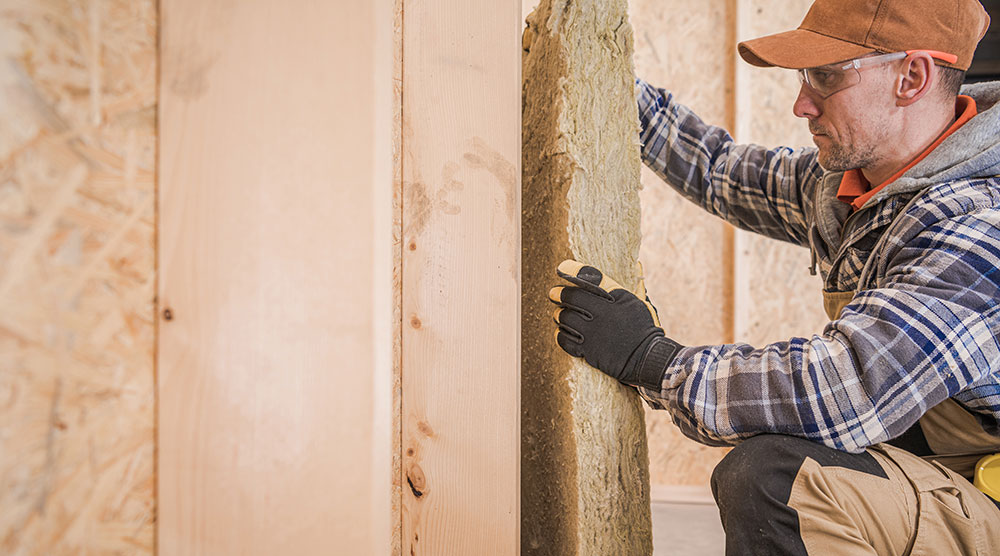
The thermal insulation of buildings is one of the key pieces in conditioning a home. It is estimated that around 70% of a home’s energy is lost through its facades and roofs, which is why it is important to create a well-insulated, airtight box. The goal of Passivhaus thermal insulation is to achieve an envelope with very low thermal transmittance. For this, insulation is essential in walls, floors, and ceilings. The insulation must be sustainable, and to do so, it must be: healthy, durable, biodegradable, and efficient.
Airtightness
Most energy in a building is lost through convection (movement of fluids, in this case air) and not through conduction (heat transfer through one or several materials). Therefore, Passivhaus architecture guarantees airtightness against outside air, minimizing the so common infiltrations. To achieve this airtight envelope, it must be studied during the project and verified during construction that there is a continuous air barrier in the facades, roof, and floor that guarantees airtightness.
Thermal bridge-free design
Thermal bridges are points on the envelope where thermal transmittance is higher, resulting in considerable energy loss. The most common cause is a discontinuity in the insulation, generating cold spots inside that can cause dampness, damage to materials, or loss of interior comfort.
Optimal windows
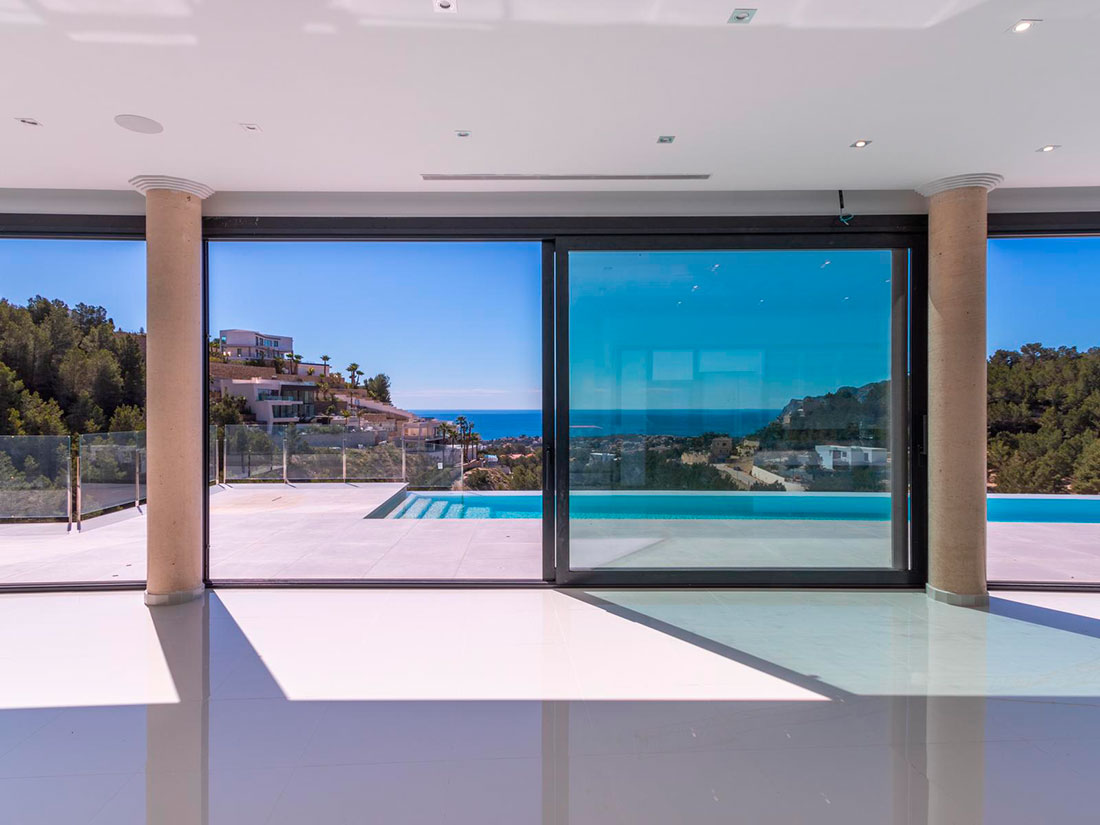
This principle builds on the previous ones, as Passivhaus architectural projects must use high-quality windows and doors that guarantee insulation and airtightness. Two or even three panels are used, with the outer ones being low-emissivity with a cavity filled with inert gas. This guarantees very low thermal transmittance, great acoustic insulation, and reflection or maintenance of energy in different seasons.
Arquifach: Architecture Studio Alicante
If you are thinking of building a custom home that respects the environment while maintaining maximum quality and comfort, contact Arquifach, Alicante architecture studio. Benefit from no-obligation advice from a great team with over 40 years of experience.